
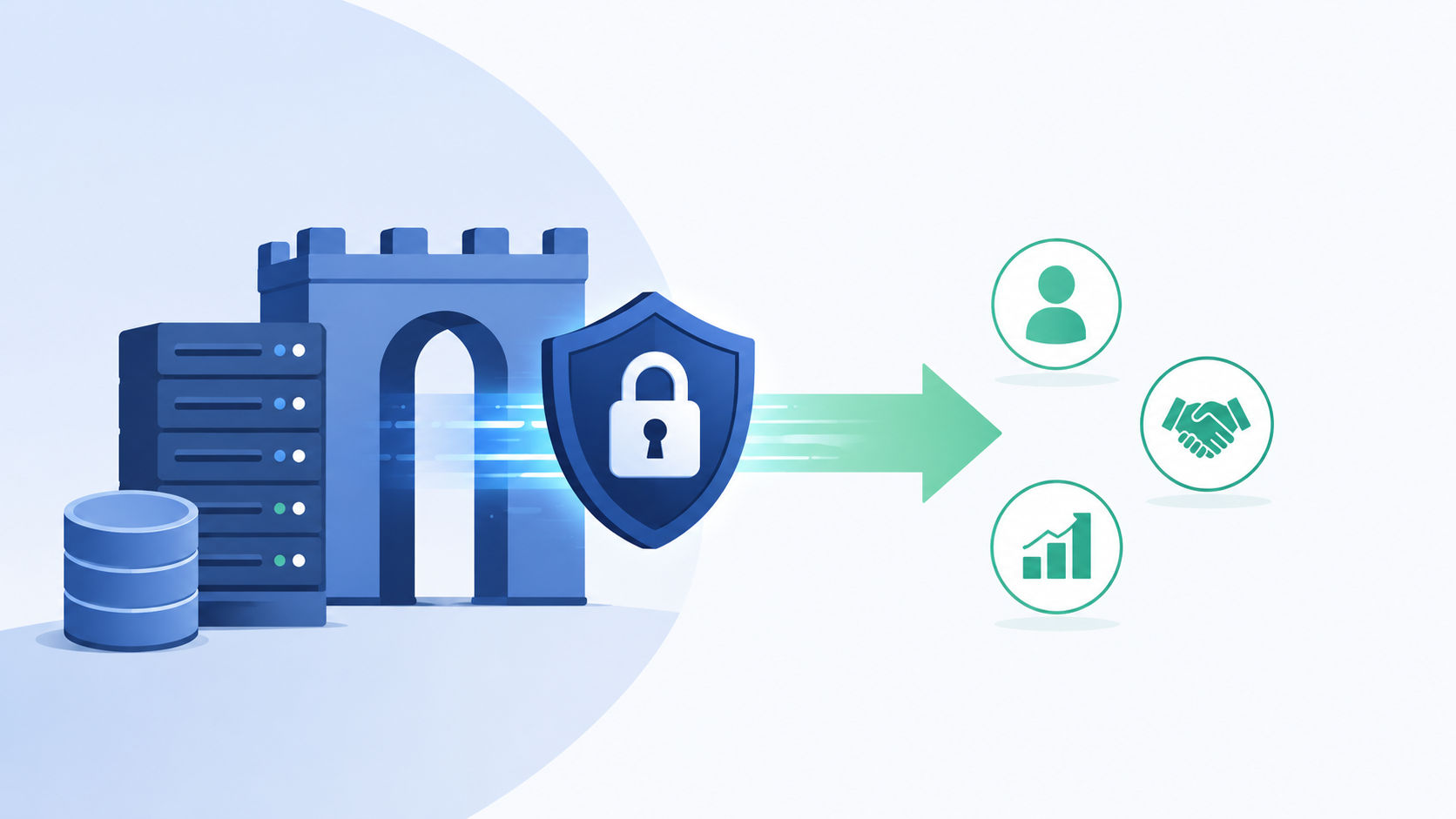
The useful signal in WatchGuard's Perimeters.io acquisition is not simply that another cybersecurity vendor bought another cybersecurity startup. It is that the acquired capability sits directly in a problem MSPs and SaaS vendors can now feel in the sales cycle: customers have moved their work into cloud applications faster than their security model has caught up.
On May 6, 2026, WatchGuard announced that it acquired Perimeters.io, a cloud application security company. WatchGuard also launched Cloud Detection and Response, or CloudDR, a product powered by Perimeters technology.
The terms were not disclosed. The product timing is the bigger story.
WatchGuard says CloudDR gives MSPs continuous visibility, detection, and automated response across cloud applications from a multi-tenant platform. The company says the product focuses on identity threats, cloud misconfigurations, and shadow AI or shadow IT. At launch, WatchGuard said the service supported more than 40 applications, including Microsoft 365, Google Workspace, Salesforce, HubSpot, OpenAI, ConnectWise, and Jira.
That list should matter to revenue teams as much as security teams. These are not obscure infrastructure systems. They are where selling, support, finance, operations, collaboration, and AI-assisted work happen every day.
The Deal Is A Demand Signal
Acquisitions are easy to flatten into portfolio logic. A large vendor sees a product gap, buys a specialist, and folds the capability into a broader platform. That is part of the WatchGuard-Perimeters story, but it misses the commercial signal.
The sharper read is that WatchGuard is betting SaaS application security has become something MSPs need to package, sell, and operate repeatedly. MSSP Alert described the move as WatchGuard pushing deeper into cloud application security for MSPs, where SaaS risk is increasingly difficult to manage through endpoint and network tools alone.
That distinction matters. Buyers may not ask for "SaaS security posture management" by name. They may ask why a former employee still has access to a customer-facing system, why an unknown AI tool is connected to business data, why no one can explain an OAuth permission grant, or why cloud-app settings differ across departments.
Those questions create sales urgency. They also create buyer hesitation.
SaaS Risk Is Becoming Buyer-Trust Risk
For years, many SaaS companies treated security proof as a procurement chore. The sales team would receive a security questionnaire, route it to operations, wait for answers, and hope the deal did not slow down.
That posture is getting weaker. Buyers are surrounded by SaaS tools, AI copilots, browser extensions, plug-ins, integrations, and outsourced service providers. The question is no longer only whether a vendor has SOC 2 or a polished privacy page. Buyers want to know whether the vendor understands how risk moves through connected applications.
That is why Perimeters' positioning is relevant beyond this one deal. Its current site emphasizes shadow SaaS and AI discovery, automated compliance, identity governance, audit and compliance, and SaaS activity monitoring. The company frames the problem as securing the full SaaS lifecycle through visibility and actionability.
Whether a buyer uses WatchGuard CloudDR, Perimeters technology, or a different platform, the underlying concern is familiar.
SaaS adoption is fast. Governance is slower. Sales teams are often caught between the two.
Why It Changes Lead Generation
Lead generation works best when pain, timing, and proof line up. A market event like this gives teams a clearer way to talk about all three.
The pain is concrete: SaaS sprawl, shadow AI, identity exposure, and configuration drift create risks that small and midmarket customers may not have the internal staff to monitor continuously.
The timing is visible: WatchGuard did not only announce an acquisition and wait for a long integration cycle. It launched CloudDR at the same time, positioning Perimeters technology as an immediate managed-service capability.
The proof is easier to explain: the affected systems are the tools buyers already recognize. Microsoft 365, Google Workspace, Salesforce, HubSpot, OpenAI, ConnectWise, and Jira are not abstract cyber categories. They are daily operating systems for modern companies.
For SaaS vendors and MSPs, this should change the messaging. Generic "secure your cloud" language is too broad. Better demand generation ties the security story to a specific buyer workflow: monitor risky access, identify unmanaged AI tools, reduce misconfiguration, simplify customer reporting, and protect business applications without adding another pile of manual work.
That kind of message is more likely to earn attention because it describes a job the buyer already knows exists.
Sales Teams Need Clearer Security Language
This acquisition does not mean every SaaS seller needs to become a security engineer. It does mean the sales motion needs cleaner language around risk.
Teams should be ready to explain:
- Which SaaS applications their product connects to.
- What permissions, scopes, and data flows are involved.
- How customers can monitor, restrict, or revoke access.
- What happens during employee offboarding.
- How AI-related workflows are governed.
- What proof the vendor can provide before procurement asks.
That is not only compliance work. It is conversion work.
When prospects are nervous, the vendor that can explain risk in practical terms often feels easier to buy from. The vendor that hides behind broad assurances creates friction, even if the product is technically strong.
This is especially important for teams selling into companies that rely on MSPs or lean IT teams. Those buyers may not have a deep internal security bench. They need vendors and partners who can turn risk into plain-language decisions.
The Operator Takeaway
The WatchGuard-Perimeters deal is a useful marker because it turns a category trend into a concrete market action. A security platform built for MSPs saw enough demand in SaaS application risk to buy a specialist and bring the capability into market immediately.
For MSPs, the opportunity is to make SaaS security repeatable rather than bespoke. For SaaS vendors, the lesson is to make security proof more concrete and easier for buyers to evaluate. For revenue teams, the move is a reminder that trust is no longer a late-stage objection. It is part of the first impression.
The practical rule is simple: if your product, service, or sales motion touches SaaS applications, identity, AI tools, integrations, or customer data, build the security story into the pipeline before the buyer asks for it.
Sources
- WatchGuard: WatchGuard Acquires Perimeters.io to Scale Cloud Security for MSPs
- WatchGuard Blog: Why WatchGuard Acquired Perimeters.io
- MSSP Alert: WatchGuard Acquires Perimeters.io, Adds CloudDR for MSPs
- Perimeters.io