
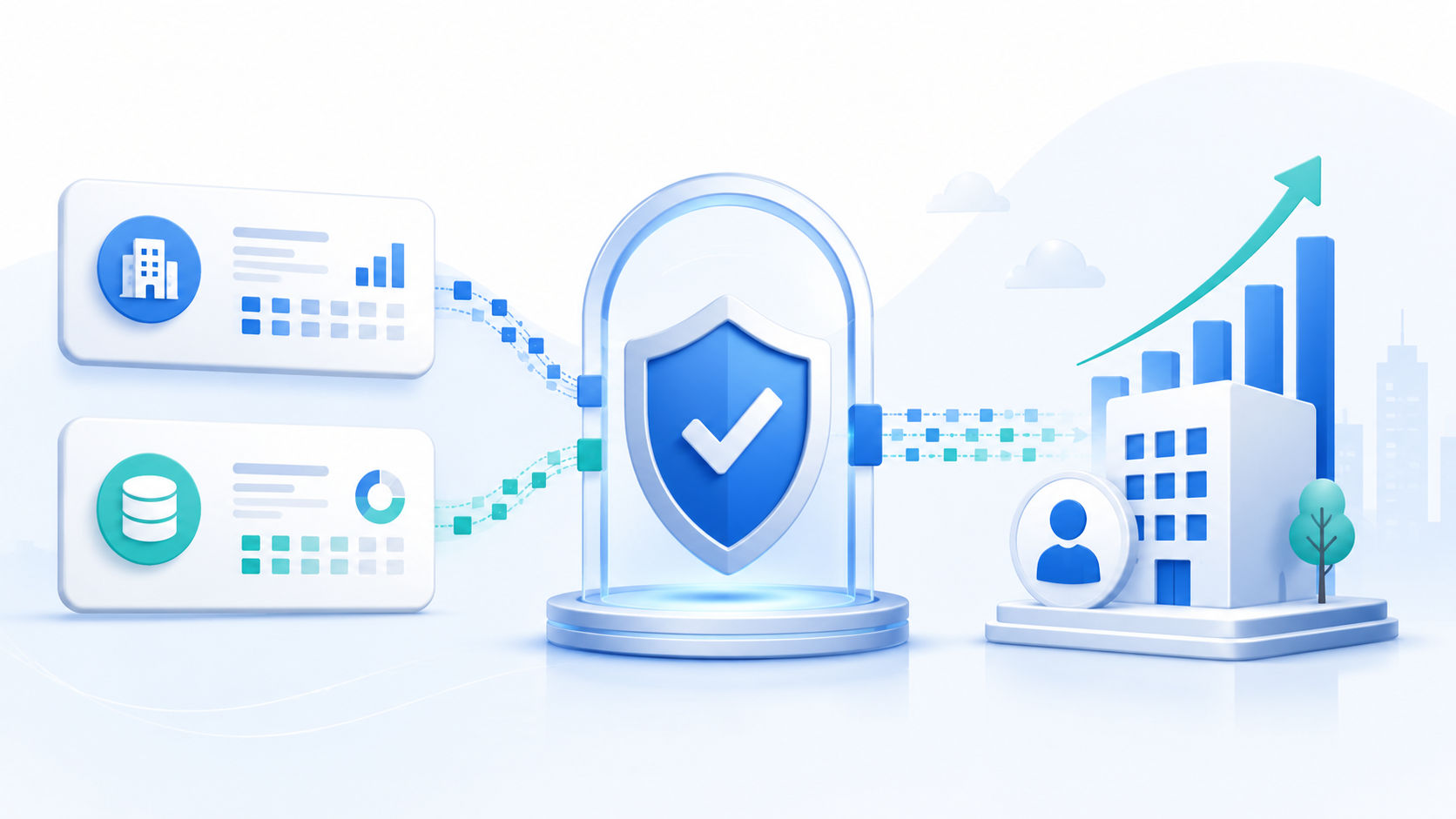
The most important part of Publicis buying LiveRamp is not the purchase price. It is the signal that marketing data infrastructure is becoming too strategic to sit at the edge of the growth stack.
On May 17, 2026, Publicis Groupe announced an agreement to acquire LiveRamp, a global data collaboration platform, in an all-cash transaction with a total enterprise value of about $2.2 billion. Publicis framed the deal as a move to accelerate data collaboration for smarter AI agents. LiveRamp's fiscal 2026 results release put the transaction's equity value at $2.5 billion and came alongside $813 million in FY26 revenue, up 9%.
For advertising and agency watchers, this is a Publicis scale story. For B2B SaaS founders and revenue leaders, it is also a demand generation story.
The deal says that identity, clean rooms, partner data, audience activation, and privacy commitments are no longer narrow adtech concerns. They are becoming the operating layer for how companies find buyers, personalize campaigns, measure influence, and justify AI-assisted marketing workflows.
That makes buyer trust a pipeline issue.
Data Collaboration Is Moving Into The AI Marketing Stack
Publicis describes LiveRamp as a platform that helps companies unify, manage, and activate data across the digital ecosystem. Its release says LiveRamp connects more than 25,000 publisher domains and more than 500 technology and data partners across 14 markets.
Those numbers matter because AI marketing systems do not become useful just because they can generate copy, summarize segments, or recommend next actions. They become useful when they can operate against trusted data.
The more advanced the automation, the more the system depends on source quality, permissions, and governance. A campaign agent that selects an account segment needs to know which signals it can use. A personalization workflow needs to know whether the underlying audience data is permitted for the use case. A measurement workflow needs to know whether clean-room joins are reliable enough to guide budget.
That is the practical reading of the Publicis-LiveRamp deal. The market is not only buying AI interfaces. It is buying the data foundation underneath them.
For B2B teams, that shift reaches beyond paid media. Lead generation, account-based marketing, partner campaigns, content syndication, event follow-up, enrichment, retargeting, and lifecycle nurture all depend on data moving between systems. Every handoff creates a trust question: where did this record come from, why are we allowed to use it, and can we explain the path if a buyer or compliance team asks?
The Neutrality Question Will Not Go Away
Publicis anticipated the obvious concern. In its announcement, the company said LiveRamp will continue to operate as a neutral, interoperable platform and provide open access across the ecosystem. It also said no current or prospective customer will be prohibited from accessing or restricted in using LiveRamp's services.
That language matters because LiveRamp sits in a sensitive position. Data collaboration platforms work only if brands, publishers, platforms, agencies, and technology partners believe the system will not tilt access, pricing, or product direction in ways that undermine their own interests.
The question for the market is not whether Publicis promises neutrality today. It does. The question is how buyers will evaluate that neutrality after ownership changes.
B2B revenue teams should pay attention because this is the same question buyers ask in smaller software decisions. A data vendor may say it is open. A lead source may say it is compliant. An AI sales platform may say it is interoperable. A clean-room provider may say it protects data.
Those claims become credible when they are supported by contract terms, audit rights, clear data-use boundaries, partner documentation, and practical controls.
Trust is not just a brand claim. It is an operating model.
Privacy Commitments Are Now Growth Strategy
Publicis also said LiveRamp will protect client, partner, and publisher data under existing contractual commitments and will not use that data beyond what is expressly permitted under those agreements. That is not a throwaway detail.
It points to the core tension in modern demand generation: growth teams want more signal, but privacy and partner constraints are getting tighter.
The easy version of marketing automation was built around broad tracking, third-party identifiers, and loose assumptions about where data could travel. That model has been under pressure for years. The harder version is built around first-party data, partner collaboration, consent logic, clean rooms, and measurement that works without exposing raw customer records.
That harder version is where B2B teams are heading.
A SaaS company may not need enterprise-grade data clean rooms on day one. But the same logic applies at smaller scale. If a team buys leads, enriches contacts, runs partner webinars, syncs audience lists, or activates account data across ad platforms and CRM, it needs to understand the permission story.
The risk is not only regulatory. It is commercial.
Bad data provenance creates bad conversations. A prospect who asks where a vendor got their information is not asking a technical question. They are testing whether the vendor respects boundaries. A compliance team that challenges a campaign list can slow a sales cycle. A partner that doubts how its data will be used may limit collaboration.
Privacy compliance is becoming part of demand generation quality.
LiveRamp's Results Explain The Strategic Value
LiveRamp was not acquired in a vacuum. Its FY26 release reported Q4 revenue of $206 million, up 9% year over year, and full-year revenue of $813 million, also up 9%. Subscription revenue reached $614 million for FY26, and subscription net retention improved to 107%.
The company also reported annualized recurring revenue of $545 million, up 8%. Those metrics help explain why Publicis is willing to put capital behind the category. Recurring data infrastructure is valuable because it becomes embedded in the way teams plan, activate, measure, and optimize growth.
The more lead generation, demand generation, and revenue operations rely on shared data, the more the underlying trust layer matters.
What Revenue Teams Should Ask After This Deal
The Publicis-LiveRamp acquisition does not mean every SaaS company should rethink its entire stack. It does mean teams should sharpen their questions.
Start with data provenance. For every major growth workflow, teams should know what data enters the system, who supplied it, what rights attach to it, and whether those rights cover the planned activation. If the answer is unclear, the workflow is carrying hidden risk.
Then look at partner dependency. If a campaign or measurement process depends on a third-party data collaboration platform, ask what happens if ownership changes, pricing changes, integration terms change, or a key partner limits access.
Evaluate AI claims with more discipline. When a vendor says its AI can optimize audiences, personalize journeys, or coordinate partner data, ask what data the system can touch, what it cannot touch, and what evidence exists for the recommendation. AI outputs are only as trustworthy as the data and permission model behind them.
Finally, move privacy proof earlier in the sales process. Buyers want confidence that the vendor has already thought through consent, retention, deletion, partner access, and auditability. For B2B SaaS companies, that proof belongs in sales enablement, product marketing, security documentation, and partner materials.
The Competitive Signal
Reuters reported that Publicis's data strategy dates back to its 2019 Epsilon acquisition and has helped the group widen its position against traditional rivals. Publicis also raised its 2027 and 2028 constant-currency growth targets after announcing the LiveRamp deal.
That competitive context matters. Large marketing and services companies are turning data collaboration into strategic infrastructure for AI-enabled client work. Smaller SaaS teams should not copy the acquisition strategy. They should copy the lesson: control over trusted data changes what a growth team can do.
Better data can improve targeting, reduce waste, support partner campaigns, and make measurement more credible. Poorly governed data creates buyer distrust, compliance friction, and partner risk.
The Takeaway
Publicis's LiveRamp deal is a marker for where demand generation is going. The next phase of growth software will be judged less by how many actions it can automate and more by whether it can use data in ways buyers, partners, and compliance teams can trust.
For SaaS revenue leaders, the immediate move is practical. Map the data behind your lead generation and demand generation workflows. Know where it came from. Know what it is allowed to do. Know which vendors and partners control access. Know how you would explain the process to a buyer.
AI can make marketing faster. Data collaboration can make it smarter. But the growth systems that earn budget will be the ones that make trust visible before the buying committee has to ask for it.
Sources
- Publicis Groupe: Publicis to acquire LiveRamp
- GlobeNewswire: Publicis to acquire LiveRamp to accelerate data co-creation
- LiveRamp: Fourth Quarter and Fiscal Year 2026 Results
- Reuters via Investing.com: France's Publicis to buy US data firm LiveRamp
- StockTitan: LiveRamp 8-K merger agreement summary