
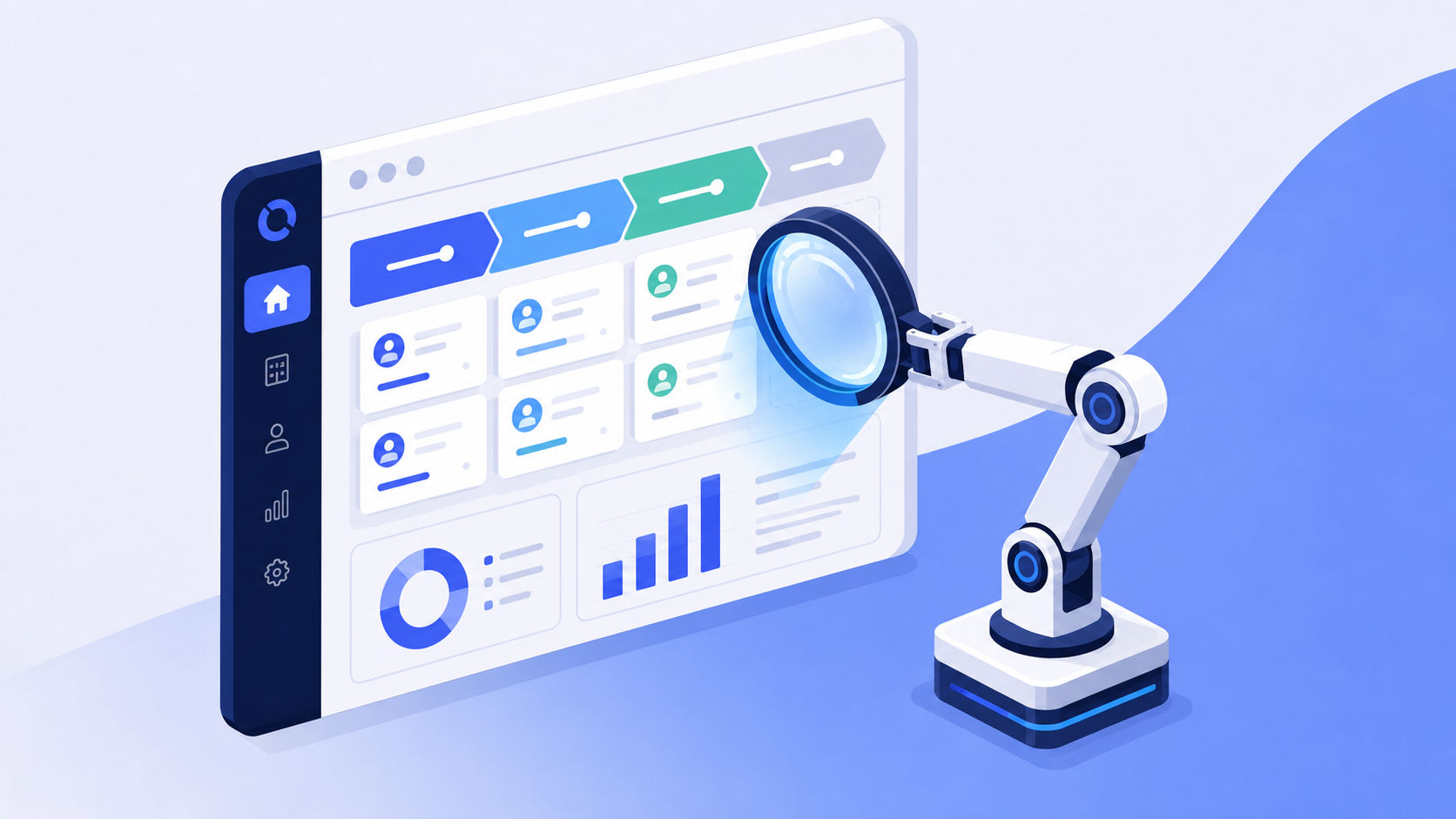
Pivot's $40 million Series B shows buyer-side AI moving into the procurement workflows that decide which SaaS vendors get approved, negotiated, delayed, or rejected. For SaaS sales teams, the implication is direct: lead generation now has to produce evidence that can survive faster vendor comparison, security review, pricing scrutiny, and contract-risk analysis.
Pivot announced on May 21, 2026 that it raised $40 million in Series B funding led by Forestay Capital and Notion Capital, bringing total funding to $70 million. The company says it serves enterprise customers including DoorDash, Lemonade, and Flix, operates in more than 25 countries, and processes $3 billion in invoices annually.
Pivot describes itself as an AI operating system for procurement. That may sound removed from B2B lead generation. It is not. Procurement is where software interest becomes an approved purchase.
What Pivot's Funding Signals
Pivot's announcement is framed around replacing legacy procurement software with an enterprise AI operating system. The company says the new capital will accelerate agentic AI development, expand into new enterprise markets, and deepen integrations with ERPs and financial systems.
The deeper signal is that procurement software is trying to become more than workflow plumbing. It wants to structure demand, collect requirements, manage approvals, preserve budget context, surface vendor risk, connect to financial systems, and give finance leaders earlier visibility into spend commitments.
That changes the sales environment.
In a traditional procurement process, a sales team might see buyer requests arrive one at a time: security questionnaire, DPA, pricing clarification, implementation detail, customer reference, contract redline, budget approval, vendor onboarding packet. The seller experiences the process as a sequence of friction points.
AI procurement compresses that sequence. If the buyer's platform can collect internal requirements, check policy, compare suppliers, review contract terms, flag compliance issues, monitor renewals, and connect approvals to budget data, the buyer has more structure earlier in the process. The seller has less room to rely on vague positioning, undocumented exceptions, or promises that only one rep can explain.
For SaaS companies, the impact is practical. Strong leads may reach procurement faster. Weak proof may fail faster.
Buyer-Side AI Is Becoming A Category
Pivot is not the only signal. Ramp announced on April 29, 2026 a fleet of AI agents across its procurement platform, including natural-language intake, workflow automation, agent-run due diligence, renewal and contract intelligence, and zero-touch sourcing in early access. Ramp said its agents can conduct custom compliance checks for security, legal, and finance teams before a request reaches an approver.
Spendflo announced Flo AI on May 13, 2026, describing it as an autonomous procurement workforce for mid-market companies. Its scope covers intake, approvals, vendor management, contracts, accounts payable, and invoice matching.
These announcements do not prove that every procurement team is ready to let software make buying decisions without human review. Enterprise purchasing is too tied to risk, policy, budget, security, and legal exposure. But procurement tools are automating more evaluation work.
That is the part revenue leaders should care about. The buyer's internal process is becoming more instrumented.
What This Changes For SaaS Sales
SaaS sales teams have spent years optimizing the front end of demand: content, paid acquisition, outbound, events, partner referrals, product-led signals, intent data, lead scoring, and demo conversion. Those still matter. But buyer-side procurement systems evaluate a different set of inputs.
They care whether pricing is explainable. They care whether the contract has nonstandard clauses. They care whether the vendor has clean security documentation. They care whether integrations are real or only implied. They care whether implementation effort is documented. They care whether renewal risk, seat usage, benchmarking, and vendor overlap can be surfaced before final approval.
That moves buyer trust from a soft sales concept into a structured evaluation layer.
For a seller, the old pattern of "we will handle that later in procurement" becomes riskier. Later may now arrive earlier, and it may arrive with a more complete checklist.
That does not eliminate sales skill. It changes what sales skill must be backed by.
Demand Generation Has To Feed The Review
The demand generation implication is straightforward: content that attracts attention but fails procurement review is incomplete.
A vendor can rank for the right keyword, convert the right form, book the right demo, and still lose momentum if the buyer cannot quickly verify fit. AI procurement makes that gap more visible because the review workflow can pull together questions that used to appear one at a time.
An AI-assisted buyer may ask:
- Which vendors support our CRM, warehouse, identity provider, and finance stack?
- Which vendors publish SOC 2, DPA, subprocessor, and AI data-use details?
- Which vendors explain pricing clearly enough to forecast expansion cost?
- Which vendors require a heavy implementation project or create new compliance exposure?
If the answers are scattered across sales decks, private PDFs, old help articles, and undocumented sales claims, the vendor is harder to defend internally.
That is why AI procurement is also a content operations issue. Public pages, documentation, security materials, customer stories, pricing explanations, integration pages, comparison pages, and sales follow-up need to tell the same story.
Pricing And Packaging Get Harder To Hide
Procurement AI also puts pressure on pricing and packaging. SaaS vendors often prefer flexibility, especially in enterprise deals. Flexible terms can help close business, but they also create review complexity.
Usage fees, platform fees, seat tiers, implementation packages, premium support, AI credits, data limits, overage terms, minimum commitments, and renewal escalators all need to be legible. If the buyer's procurement system can compare those variables against internal benchmarks or competing offers, unclear pricing becomes a disadvantage.
That does not mean every vendor must publish full enterprise pricing. It does mean the sales team should be able to explain what drives cost, what changes at renewal, what happens when usage grows, and which terms are negotiable.
The same principle applies to packaging. If a vendor says the product is easy to adopt but the buyer later discovers that three integrations, a services package, and a six-week data cleanup project are required, trust breaks late in the cycle.
Security And Compliance Become Deal Evidence
AI procurement is especially relevant for categories where buyer trust is part of the sale: lead generation, sales intelligence, enrichment, martech, cybersecurity, customer data platforms, AI agents, and revenue automation. Buyers already ask tough questions. More automated procurement workflows will help them ask those questions earlier and more consistently.
SaaS vendors should expect sharper review around data sourcing, consent, subprocessors, retention, model training, customer data isolation, access controls, audit logs, incident response, and compliance posture. The point is to make credible proof easy to find and easy to reuse inside the buyer's approval chain.
Deloitte's 2026 source-to-contract AI vendor report shows why this matters from the procurement side. It lists current procurement AI use cases such as spend dashboards, RFI/RFP/RFQ generation, contract summaries, key-term extraction, supplier risk assessment, guided buying, contract risk assessment, and supplier research. Those are exactly the workflows where vendor evidence gets inspected.
If a company sells trust-sensitive software, security proof is no longer only a late-stage technical artifact. It is part of demand conversion.
What Revenue Teams Should Do Now
The first move is to audit the buyer's proof path. Take a real deal and trace the evidence the buyer needed between first demo and contract signature: pricing logic, integration detail, implementation scope, security documents, compliance answers, legal terms, business case, references, product limits, and renewal assumptions. If it exists only in private slides, sales engineer notes, Slack answers, or one-off emails, the process is fragile.
The second move is to clean up claims. Demand generation copy should not promise more than procurement proof can support. If the website says "deploy in days," the implementation guide should explain when that is true. If the sales page says "enterprise-grade security," the trust center should show what that means.
The third move is to prepare comparison-ready assets. Vendors should know how they compare on fit, not just features. Strong sales content says who the product is for, where it is strongest, where it is not a fit, and what a buyer needs in place to get value.
The Operator Takeaway
Pivot's Series B is not just a procurement software funding story. It is a sign that the buying side of B2B software is becoming more automated, better instrumented, and less tolerant of unclear vendor claims.
For SaaS teams, the practical takeaway is simple: demand generation cannot stop at interest creation. It has to create deal-ready evidence.
The teams that adapt will not only write better blog posts or build better sales decks. They will make pricing, security, integrations, implementation, ROI, and contract risk easier for a buyer to verify. That matters because procurement AI will not make buyers less skeptical. It will make skepticism faster, more structured, and harder to talk around.
The sales advantage goes to vendors that are easy to trust before the final review begins.
Sources
- Pivot funding announcement: https://www.pivotapp.ai/blog/pivot-raises-40-million-series-b-to-replace-legacy-procurement-software-with-an-enterprise-ai-operating-system
- Ramp AI procurement agents announcement: https://www.prnewswire.com/news-releases/ramp-launches-fleet-of-ai-agents-across-its-procurement-platform-302756657.html
- Spendflo Flo AI announcement: https://www.globenewswire.com/news-release/2026/05/13/3294065/0/en/spendflo-launches-flo-ai-an-autonomous-procurement-workforce-for-mid-market-companies.html
- Deloitte: Selecting Source-to-Contract AI Vendors: https://www.deloitte.com/content/dam/assets-zone2/de/de/docs/services/consulting/2026/Deloitte_Selecting-Source-to-Contract-AI-Vendors.pdf